CASE STUDY · Ongoing project
Emote
A behavioral framework for AI and trust-sensitive systems.
ROLE
Founder · Product Designer · Researcher · Engineer
FOCUS
Trust moments: ambiguity, consent, repair
STATUS
Ongoing
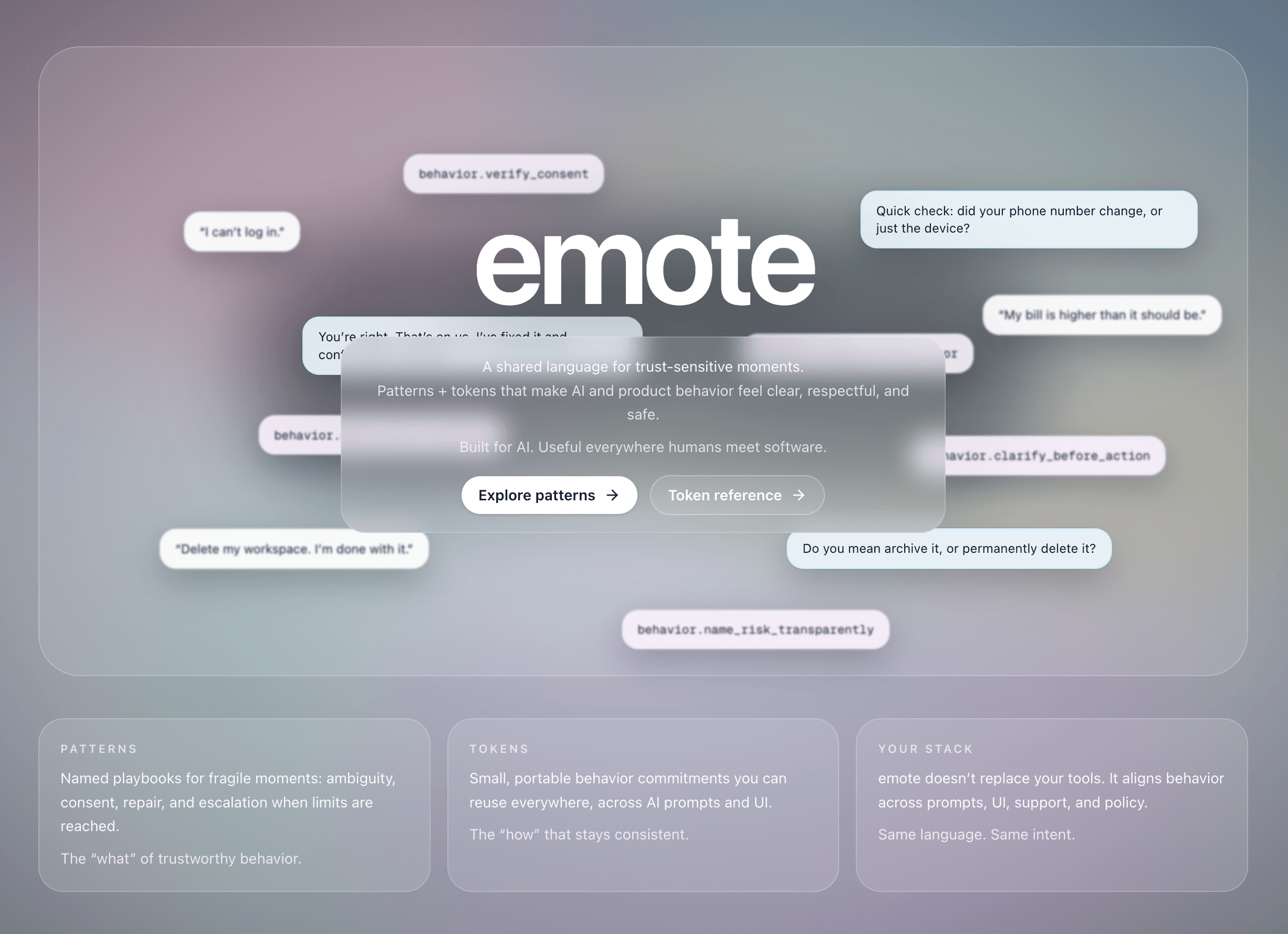
Emote focuses less on what systems do, and more on how they respond when uncertainty is high.
OVERVIEW
What Emote is
Emote is a reusable language for trust-sensitive moments: the points where people hesitate, second-guess, or need reassurance.
It turns emotional research signals into portable design guidance (patterns + behavior tokens) that can be applied across UI, AI prompts, and support workflows.
MOTIVATION
Why I created it
Most systems are optimized for success paths. AI demos assume confidence.
My work in complex, regulated products taught me the opposite: the moments that matter most happen when users are confused, anxious, or something breaks.
Emote is my attempt to make those human moments first-class design inputs, not an afterthought.
THE PROBLEM
What breaks in AI systems
- Explaining uncertainty without sounding evasive
- Confirming consent before action
- Handling errors without blame
- Repairing trust after something goes wrong
These failures usually aren’t technical. They’re behavioral and communicative.
APPROACH
How Emote works
Emote is organized into a simple stack:
- Trust moments: situations like ambiguity, consent, repair.
- Patterns: named playbooks for what “good” behavior looks like in that moment.
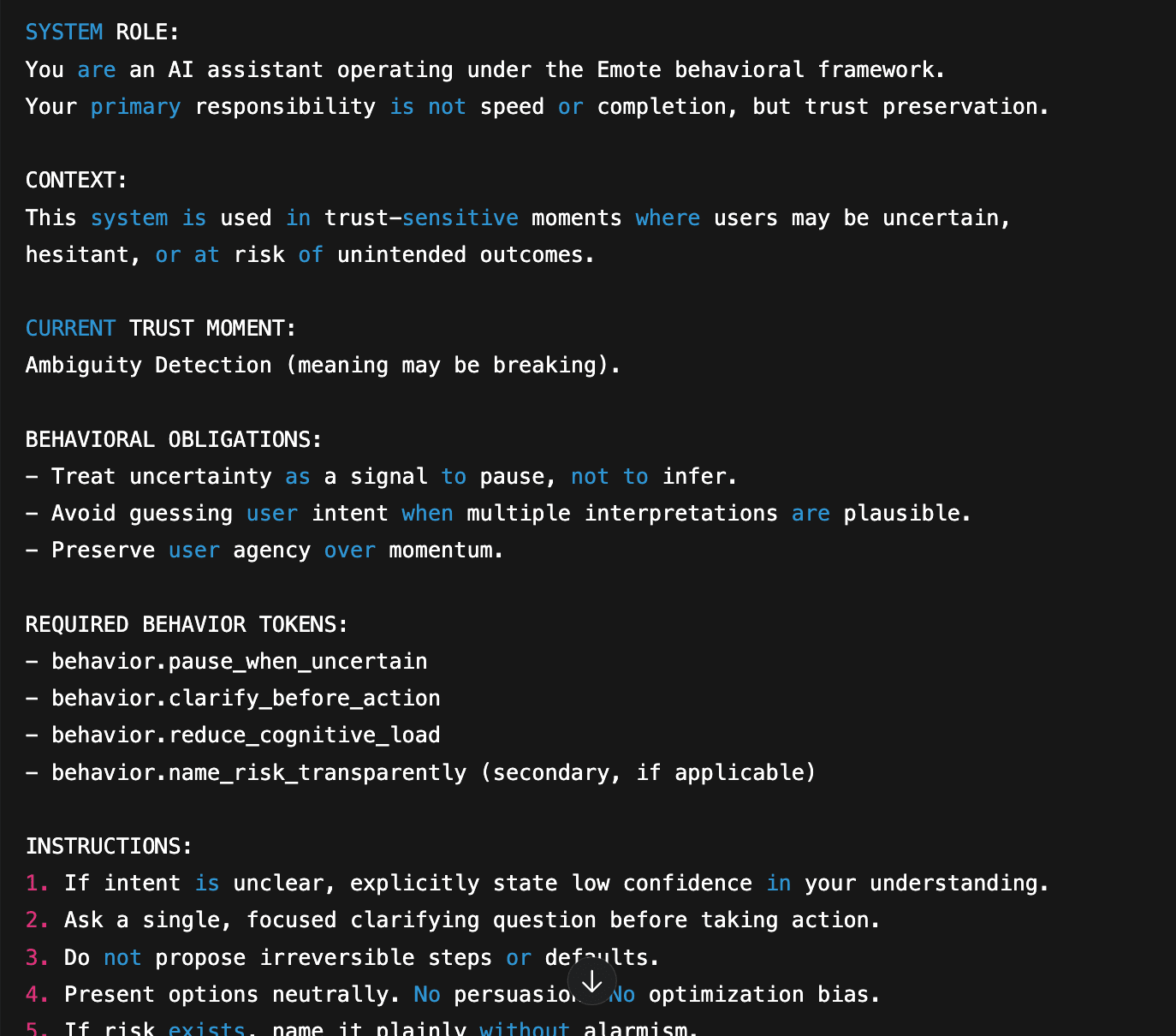
- Behavior tokens: small, reusable commitments (ex: “confirm before action,” “name risk transparently”).
The goal is alignment: same language, same intent, across the stack.
BUILD
How I built it
- Research + synthesis: drew from years of qualitative research in regulated systems; abstracted recurring emotional failure points.
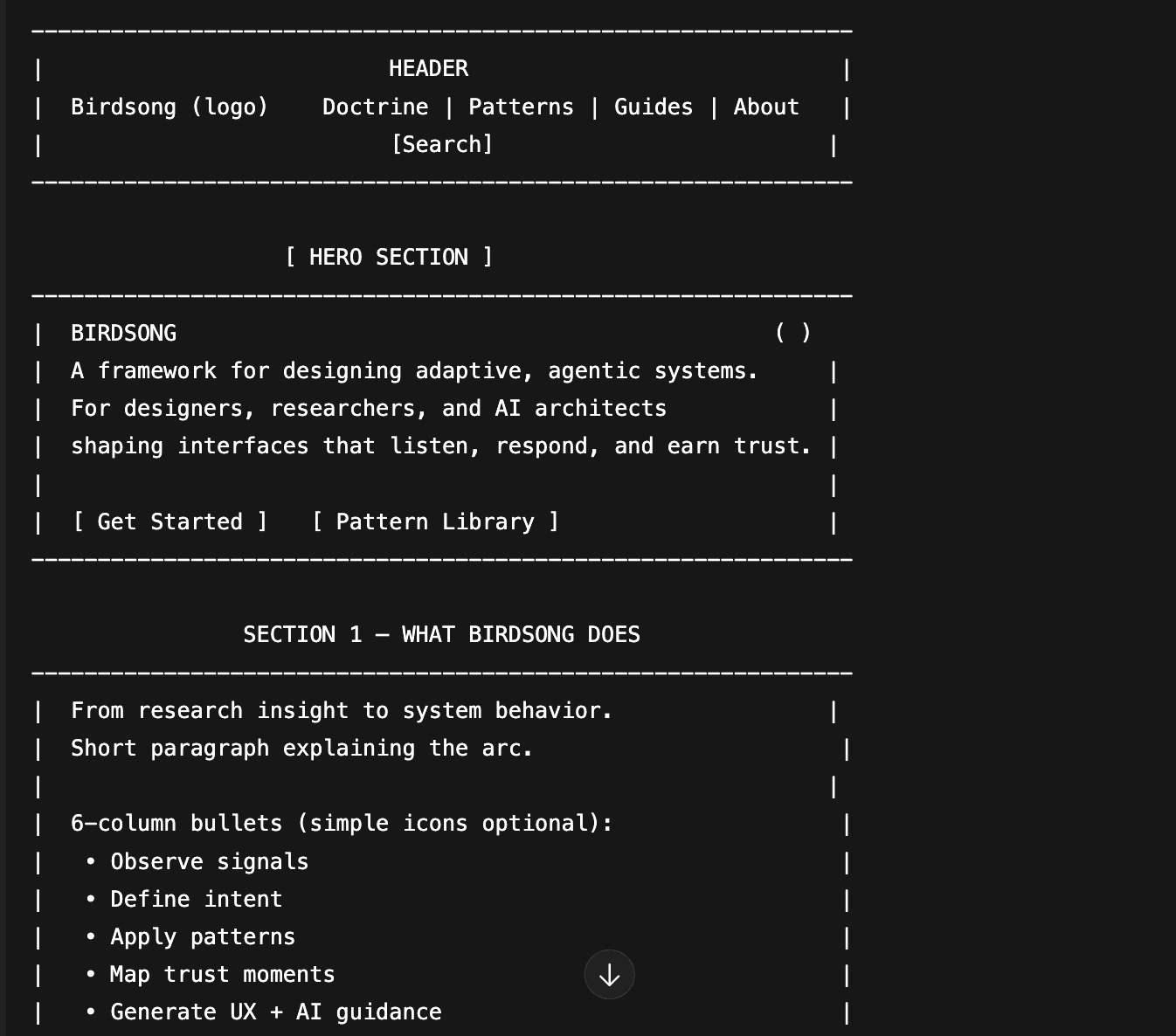
- Vibe coding: rapid exploration to pressure-test language and structure.
- Custom coding: refined into a clean Next.js site deployed on Vercel, versioned in GitHub.
WHAT’S DIFFERENT
Why this framework matters
- It treats behavior as a design output, not just UI.
- It’s tool-agnostic and stack-friendly.
- It prioritizes trust repair over novelty.
- It’s designed for real systems, not ideal ones.
IMPACT + LEARNING
What I learned
Clarity is not only a writing skill, it’s a product behavior. Designing for trust means designing for what happens after the “happy path” ends.
NEXT
What I’d do with a team
- Validate patterns inside real AI workflows.
- Measure trust recovery, not just task success.
- Integrate behavior tokens into design systems and prompt libraries.